Jackson Park's own history includes the Chicago Park District's predecessor dividing one large park into distinct, separately named ones. History alone does not settle the recognition question — only a written CPD determination does that — but it is part of the documented record this case is built on.
1. How Jackson Park itself was formed
Modern Jackson Park's own documented origin: one division of a larger, single park that was itself later subdivided.
A single 1,055-acre "South Park"
The South Park Commission — the Chicago Park District's predecessor on the South Side — created one unified park called South Park, with an eastern division, a western division, and a connecting Midway between them.
The divisions are named
In 1880 the Commission solicited names for the two divisions, and in 1881 formally named the eastern division Jackson Park and the western division Washington Park. The connecting strip became the Midway Plaisance. CPD's own Midway Plaisance history states plainly: "All three sites were originally conceived as a single landscape known as South Park." A 2022 CPD Board description says the original 1,055-acre complex is "now home to modern-day Jackson Park, the Midway Plaisance, and Washington Park." The National Park Service independently describes the same history.
Absorbed into the modern Chicago Park District
The South Park Commission's parks, along with Chicago's other independent park commissions, were consolidated into the single Chicago Park District created that year.
CPD's own Jackson (Andrew) Park page confirms the underlying facts: the South Park Commission hired Olmsted and Vaux in 1869 to lay out the 1,055-acre park with "eastern and western divisions connected by a grand boulevard named the Midway Plaisance," the eastern division (originally "Lake Park") was renamed Jackson Park, and "in 1934, the park became part of the Chicago Park District's portfolio when the 22 park districts were consolidated." CPD's Featured Capital Projects page separately confirms Washington Park "was conceived in 1871... as part of a large 1,055-acre park known as South Park." CPD's own 2011–2024 Capital Projects by Park report lists all three current park numbers directly: Jackson (Andrew) — Park No. 19, Washington (George) — Park No. 21, and Midway Plaisance — Park No. 1268. Confirmed
A note on Jackson Park's own acreage: the 1,055-acre figure above is the combined 1869–71 South Park Commission charge — Jackson Park, Washington Park, and the Midway Plaisance together — not Jackson Park's own present-day footprint. CPD's Jackson (Andrew) Park facility page separately gives Jackson Park's own current size as 551.52 acres, confirmed independently by Wikipedia's NRHP-sourced infobox. CPD's own page states both figures in nearby sentences without distinguishing them, which is worth watching for: any document citing "Jackson Park's acreage" should use 551.5 acres, reserving the 1,055-acre figure for the original combined South Park system only. Confirmed
1b. Olmsted's original vision for this shoreline
Reading the site the way Olmsted himself framed it — not as a modern reconstruction of his intent, but from what he and his contemporaries actually documented about this stretch of lakefront.
Olmsted's ambitions for the lakefront portion of the 1871 plan were explicit and remained a reference point for the site for decades: a yacht harbor, winding lagoon-side walks, small bridges, and a public bathing beach were all part of his original conception for this stretch of shoreline — an ambition he is documented as having articulated as early as 1895.
That bathing-beach ambition was not realized quickly. The lake here was not fit for swimming until Chicago's Sanitary and Ship Canal, completed in 1899, finally diverted sewage away from the shoreline. Only then did the lakefront become desirable for wading and bathing rather than mere strolling. The South Park Commission responded with a 10-acre beach extension (1914–1917) and, in 1919, the Classical Revival bathing pavilion that still anchors the site today — a building historians and preservationists agree was conceived in keeping with Olmsted's own earlier vision of a beach pavilion at this location.
Three Olmsted-consistent principles for this shoreline
- The water is the organizing feature, not an amenity bolted onto a lawn.
- Public access and free use should never be secondary to ornament.
- Any built structure should read as continuous with the surrounding dune and lagoon ecology rather than interrupting it.
The restoration work already completed at the 63rd Street Beach Dunes since 2000 — expanded in 2010, and stewarded jointly by the Chicago Park District and Shedd Aquarium since 2012 — is arguably the closest thing the site has to a living, functioning expression of that Olmstedian intent.
Illustrating Olmsted's original vision, 1869–1891
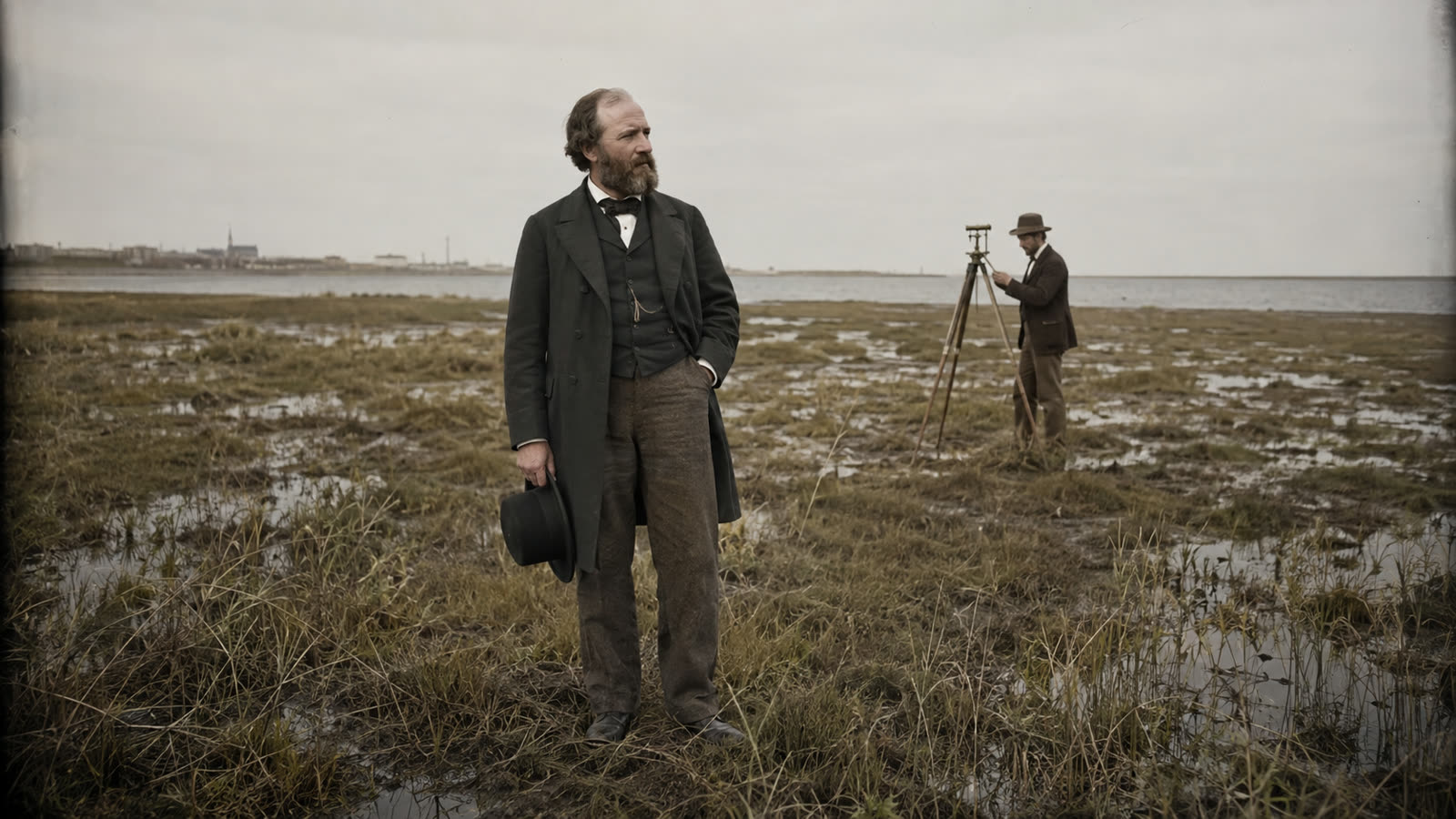
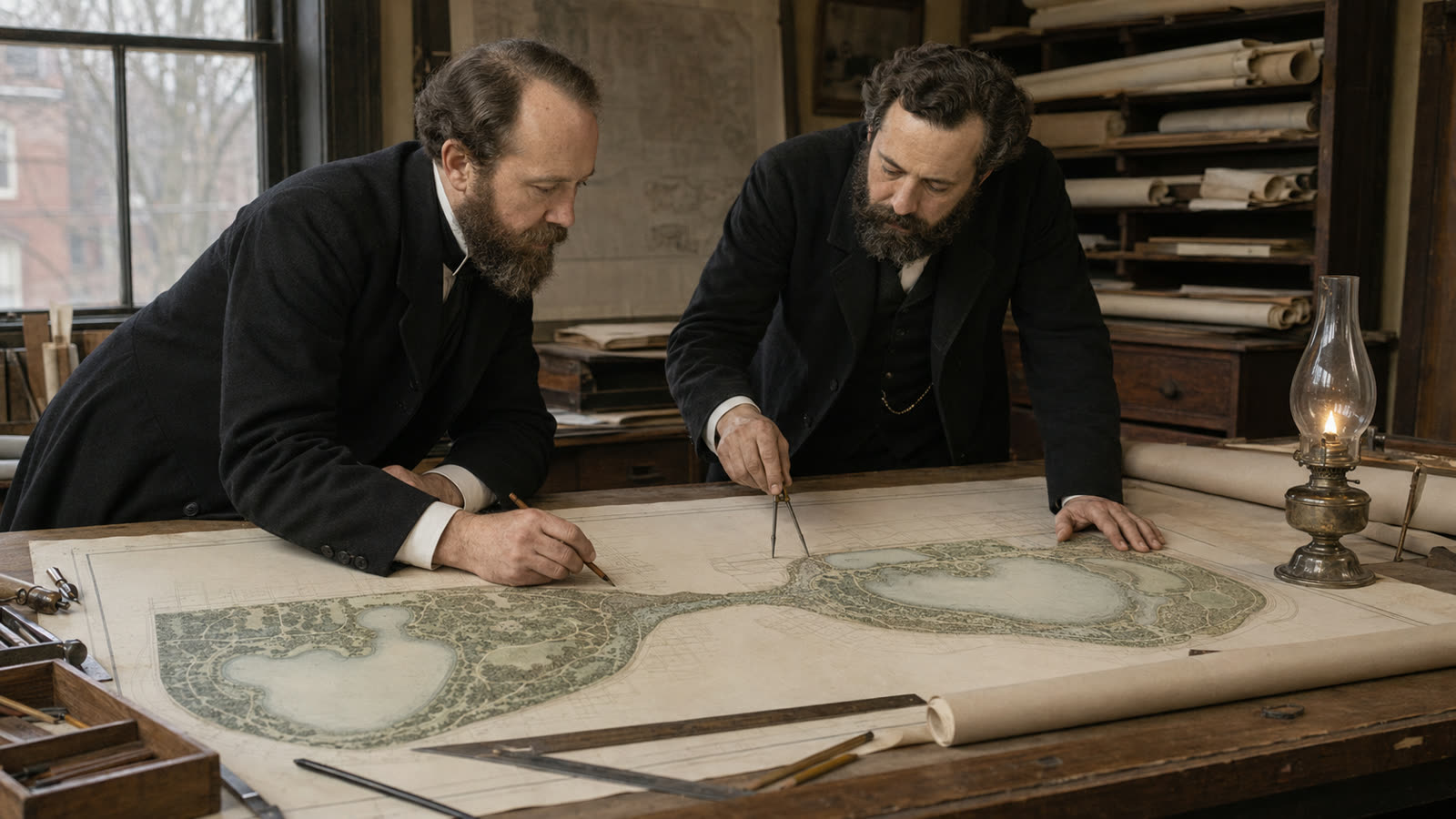
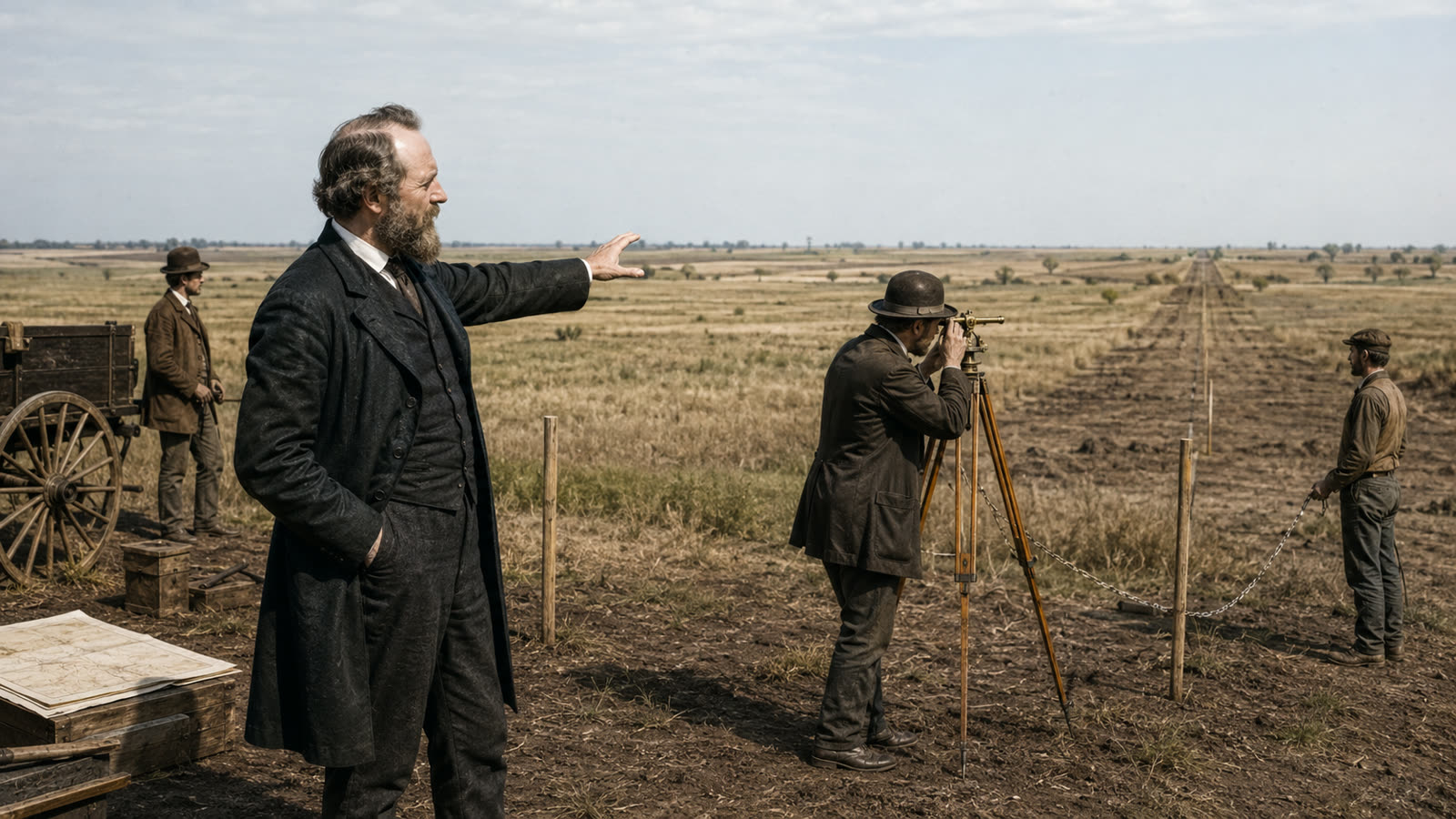
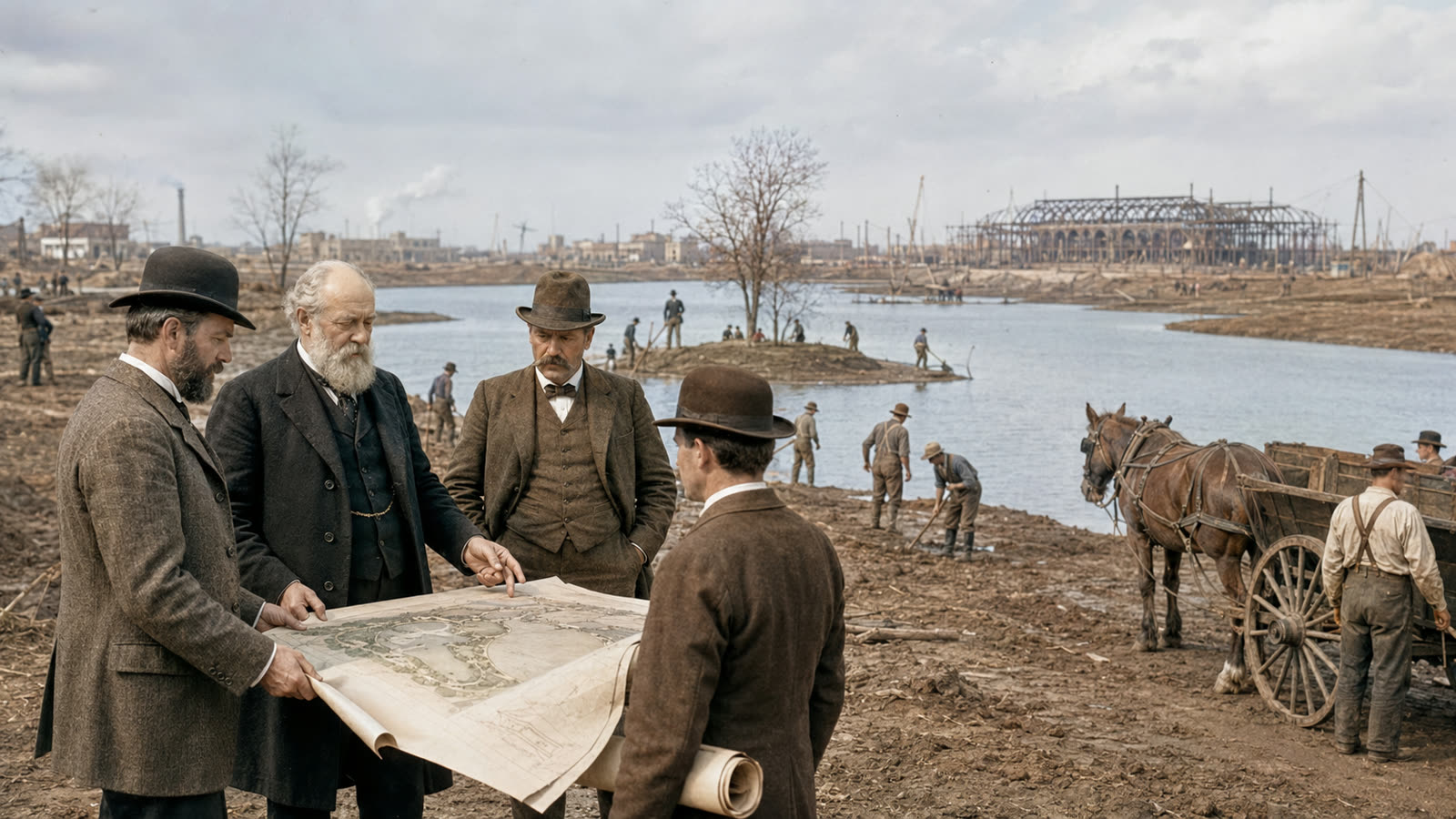
These four images are historically informed illustrations, generated to depict documented events — Olmsted's participation, collaborators, dates, and planning responsibilities are sourced; the specific poses, expressions, and conversations shown are necessarily reconstructed, not archival.
2. 63rd Street Beach's own history
Long before anyone called it "Bongo Beach," it was already one of the South Side's great public gathering places. (See the fuller version of this timeline on the About & History page.)
A Paved Beach
As early as 1888, this stretch of shoreline was a paved beach built from granite blocks — one of the earliest developed public beaches on the South Side lakefront.
The Lake Becomes Swimmable Here
The Chicago Sanitary and Ship Canal is completed, finally diverting sewage away from this stretch of shoreline. Only after this does the lakefront become desirable for wading and bathing, rather than mere strolling — the missing link between the 1888 paved beach and the 1919 pavilion below.
A 10-Acre Beach Extension
The South Park Commission responds to the newly swimmable water with a 10-acre beach extension — direct groundwork for the pavilion that follows.
The Bathing Pavilion Is Built
A bathing house was constructed next to the beach, giving the site the Mediterranean Revival building that still anchors it today — conceived in keeping with Olmsted's own bathing-beach ambition for this location, articulated as early as 1895 (see §1b above).
The Drum Circle Begins
Drummers began gathering at 63rd Street Beach, building a circle so consistent — nearly every warm day, for decades — that it became a defining feature of the beach itself.
A Community-Shaped Redesign
When Lake Shore Drive was rebuilt, concerned residents pushed back on a generic concrete-and-turf plan and helped shape the native dune-grassland design you see today — direct precedent for what an organized, engaged community can do here.
Gated Parking, and a Fight to Stay
In July 2025, new gated parking pushed the drum circle out of its longtime spot, prompting the organizing that led directly to this formation effort.
3. Does 63rd Street Beach warrant separate treatment?
The precedents in the next two sections establish that CPD's park identities are not frozen. That answers whether separation is possible. It doesn't answer whether 63rd Street Beach specifically warrants it. This section makes that case against four factors — geography, function, management, and community use — using only what CPD's own current pages say, verified directly against those pages rather than assumed.
Geography concede the current classification, then show the physical distinction
What CPD's own pages say
CPD's 63rd Street Beach facility page lists it as "Located Within: Jackson (Andrew) Park" — that's the current administrative status, and this case doesn't pretend otherwise. But CPD's separate 63rd Street Beach Dunes page describes the same site as "located adjacent to historic Jackson Park," notes it is "bordered and made iconic by the six-lane roadway of DuSable Lake Shore Drive," and describes pedestrian infrastructure — including an underpass — built specifically to connect the beach to Jackson Park. The two facilities even carry different addresses: Jackson Park's is 6401 S. Stony Island Ave.; the beach's is 6300 S. DuSable Lake Shore Drive.
Why it matters
A site that CPD's own planning language describes as needing to be "tied to" the park across a six-lane highway is not an undifferentiated interior corner of that park. CPD could reasonably respond that many facilities inside large parks have separate addresses and road separations without being separate parks — and that's a fair point. Geography establishes that a rational boundary already exists in CPD's own description of the site; it does not, by itself, establish entitlement to draw it. That's why this argument needs the next three factors too.
Function the strongest of the four factors
What CPD's own pages say
CPD describes Jackson Park's broader portfolio as fieldhouse, gymnasium, golf course, athletic fields, gardens, lagoons, harbors, and Wooded Island — a general inland recreation landscape. 63rd Street Beach's own facility page describes something categorically different: lifeguard-supervised swimming, a distance-swimming area, a non-motorized boat launch, restrooms and showers, interactive water fountains, rentable meeting rooms, bike rental, concessions, a pay-and-display parking lot, an ADA-accessible beach walk, and a beach wheelchair at the lifeguard office. The same page describes the site's origin: in 1914 planners "developed a new plan for the landfill," completed a 10-acre beach extension in 1917, and finished the Classical Revival bathing pavilion in 1919.
Why it matters
This wasn't an incidental corner of Olmsted's inland park design. It was purpose-built, in response to a specific recreational demand, as a dedicated beach and bathing destination — a function nothing else in Jackson Park performs. That functional identity was deliberate in 1914 and remains operationally distinct today.
Management strong, and now fully documented
What CPD's own pages say
Current CPD capital records place 63rd Street Beach spending under Jackson Park, Park No. 19 — the beach is not already administratively independent, and this case does not claim otherwise. But CPD separately maintains a dedicated 63rd Street Beach House Special Event Venue page, with its own booking process and a stated capacity of up to 1,600 people (cocktail-style) for the entire site — run through CPD's Special Event Venues program, the same operational track as other stand-alone rental venues, not through Jackson Park's general fieldhouse. The Beach Dunes are separately described as an actively managed natural area with its own volunteer stewardship activity (planting, seed collection, litter removal).
Why it matters
The requested reclassification would not invent an operational identity that doesn't exist — it would formalize, at the park-identity level, distinctions CPD already administers at the facility level: a beach/aquatics operation, a Special Event Venue, and a Natural Areas program, all layered onto one site.
Community use the factor with the most current, verifiable evidence
What the record shows
This is not a historical abstraction — this organizing effort has direct, dated, primary-source evidence of an active, identifiable community of use at this specific site, independent of Jackson Park's general public. The Representation Gap Analysis documents a September 8, 2025 resolution, adopted 16–0–2 by the Jackson Park Advisory Council itself, recognizing the 63rd Street Drummers Circle as "a living tradition that fosters intergenerational connection... one of Chicago's most important and unique cultural landmarks," followed by a written reply from CPD's own General Superintendent and continued advocacy through May 2026. CPD's Beach Dunes page separately documents an ongoing volunteer stewardship program at the site (dune planting, seed collection, litter and invasive-species removal) distinct from general park volunteering elsewhere in Jackson Park.
Why it matters
63rd Street Beach has at least three overlapping, identifiable communities of use with a direct, documented stake in how the site specifically is governed: swimmers and beach families, the drumming/cultural community, and environmental stewardship volunteers. CPD's own PAC Guidelines state that "the Park District recognizes only one (1) registered PAC per park" — which is exactly why this matters. As long as 63rd Street Beach remains only a facility inside a 551.5-acre park, that distinct constituency is represented only through a governance structure built for the whole park, not the beach specifically.
Putting it together: no single factor above has to carry this case alone. Geography shows a rational boundary already exists in CPD's own description of the site. Function shows the site was purpose-built for, and still performs, a use nothing else in Jackson Park performs. Management shows CPD already administers the site through distinct operational systems, even while its park-identity coding hasn't caught up. Community use shows a real, current, multi-constituency stake in the outcome. The question for CPD becomes: given that convergence, what legitimate park-management purpose is served by continuing to treat this site as an undifferentiated part of Park No. 19?
4. Has CPD reorganized park identity since 1934?
Bucket A: does the Chicago Park District have a track record of subdividing, reclassifying, consolidating, or redrawing the boundaries of existing park units? These are the strongest available modern (post-1934) examples.
Grant Park → Maggie Daley Park (a named park within a park)
What happened
CPD states that in 2014 it began transforming "the northeastern part of Grant Park" into "Maggie Daley Park" — described in CPD's capital-project record as "a new multi-functional 27-acre park" replacing Daley Bicentennial Plaza and Peanut Park. CPD still refers to Maggie Daley as "a park within Grant Park," with its own name, programming, fieldhouse/operations, and supervisor identity.
Why it matters
This is CPD's cleanest modern reclassification action, and it shows CPD's park taxonomy isn't binary (independent numbered park vs. mere facility) — there's a third category: a distinctly named, operationally recognizable "park within a park." That gives BBPAC a lower-friction alternative ask: designate a defined portion of Jackson Park as "63rd Street Bongo Beach Park" for management, advisory, and stewardship purposes, with full park-number/PAC recognition sought separately.
Lake Shore Playground → Lake Shore Park + Seneca Park (#1242)
What happened
CPD states that "as early as 1907, the eastern portion of this park was considered part of nearby Lake Shore Playground." In 1915 an armory physically separated the two spaces; the City later treated the eastern parcel independently as Seneca Park, which CPD began leasing in 1959. Today Seneca is independently recorded as Seneca Park — Park No. 1242 — with its own PAC representation.
Why it matters
This is the closest available example of land once treated as part of one park later being administered as its own separately numbered park with its own PAC. The limitation: the physical split was caused by the armory before CPD existed, not by an internal CPD Board decision — strong evidence of the end-state BBPAC is asking for, not proof CPD itself initiated the split.
Rutherford + Sayre + Rutherford Sayre → consolidated Rutherford Sayre Park (#127)
What happened
CPD's own history describes three originally separate parks — Rutherford, Sayre, and Rutherford Sayre — combined by the Chicago Park District "in mid-1999... to form Rutherford Sayre Park."
Why it matters
A modern, post-1934 CPD administrative restructuring of park identities — proof CPD's internal park boundaries aren't historically frozen, and that CPD has the administrative authority to change the configuration of existing park units. It runs in the opposite direction from what BBPAC needs (consolidation, not division), but it supports a fair question to put to CPD in writing: if the District can combine separately recognized park units into one, what rule prevents it from separating a sufficiently distinct portion of an oversized park into a distinct unit?
Boundary transfers and additions (Dooley Park, Washington Park, 2024 Board actions)
What happened
CPD reports Dooley Park was expanded via a 1991 land acquisition, then partially transferred to the City in 2003 for a Board of Education building. Washington Park transferred roughly four acres for an armory in 1928 and another parcel for Dyett High School in 1991. As recently as 2024, the CPD Board approved land transactions expressly to expand existing park boundaries.
Why it matters
Supporting evidence, not a standalone precedent: park boundaries are administratively adjustable, not fixed cadastral lines.
Northerly Island — Park No. 34 (downgraded as primary precedent)
What happened
CPD currently records Northerly Island as Park No. 34 and describes the former Meigs Field as transformed into a 119-acre park. However, Chicago Public Library's CPD archive has drawings labeled "Northerly Island Park #34" dating to 1922 — meaning Park 34's separate identity predates modern CPD action.
Why it matters
Good corroborating evidence that large lakefront systems can include separately numbered park units, but not a clean modern "split" precedent. Kept as a supporting exhibit, not a lead argument.
5. Can a beach itself be an independent numbered CPD park?
Bucket B: does CPD's own inventory show that a beach need not be administratively absorbed into a larger neighboring park?
The current split: 15 beaches inside bigger parks, 12 as their own park
What happened
Of CPD's 27 current designated swimming beaches, 15 are administered as facilities inside a larger named park, and 12 are their own separately numbered park. 57th Street Beach sits inside Jackson Park, Park #19, right alongside 63rd Street Beach — so Jackson Park currently carries two of CPD's beaches without either having its own beach-specific park number.
| Beach | Parent park | Park # |
|---|---|---|
| 12th Street Beach | Northerly Island Park | 34 |
| 57th Street Beach | Jackson Park | 19 |
| 63rd Street Beach | Jackson Park | 19 |
| Calumet Beach | Calumet Park | 11 |
| Foster Beach | Lincoln Park | 100 |
| Humboldt Beach | Humboldt Park | 219 |
| Loyola Beach | Loyola Park | 115 |
| Margaret T. Burroughs / 31st Street Beach | Burnham Park | 27 |
| Montrose Beach | Lincoln Park | 100 |
| North Avenue Beach | Lincoln Park | 100 |
| Oak Street Beach | Lincoln Park | 100 |
| Oakwood / 41st Street Beach | Burnham Park | 27 |
| Ohio Street Beach | Jane Addams Memorial Park | 1224 |
| Osterman Beach | Lincoln Park | 100 |
| South Shore Beach | South Shore Cultural Center Park | 429 |
15 beaches administered as facilities inside a larger park.
| Beach | Standalone park | Park # | Documented split from a larger park? |
|---|---|---|---|
| Hartigan Beach | Hartigan (David) Beach Park | 1248 | No |
| Helen Doria Beach | Doria (Helen) Beach Park | 1251 | No |
| Fargo Beach | Fargo (James) Beach Park | 1253 | No; acquisition-date conflict needs property file |
| Howard Beach | Howard (Ure) Beach Park | 1256 | No |
| Marion Mahony Griffin Beach | Mahony Griffin (Marion) Park | 1257 | No |
| Juneway Beach | Juneway Beach Park | 1258 | No |
| North Shore Beach | North Shore Beach Park | 1260 | No |
| Tobey Prinz Beach | Prinz (Tobey) Beach Park | 1261 | No |
| Rogers Beach | Rogers (Phillip) Beach Park | 1262 | No |
| Lane Beach | Lane (George) Beach Park | 1265 | No — but an especially clear independent-classification case (see below) |
| Leone Beach | Leone (Sam) Beach Park | 1013 | No |
| Rainbow Beach | Rainbow Beach Park | 1001 | Reverse case — a 1959 consolidation of two smaller beaches, not a split |
12 beaches that are their own standalone numbered park. One further numbered beach-named park, Arthur Ashe Beach Park #459, still carries a park number but is not among CPD's current 27 designated swimming-beach facilities.
Why it matters
Being a facility inside a larger park is common among CPD beaches, not automatically disqualifying — so this case has to rest on 63rd Street Beach's distinctive facilities, history, and operations, not simply on how often CPD splits beaches out. That's exactly why sections above (the Beach House, the dune habitat, the drumming tradition, JPAC's own "Special Event Venue" designation) carry the actual weight of the argument.
Lane (George) Beach Park — Park #1265 (lead case)
What happened
CPD's history says the Lincoln Park Board once contemplated extending Lincoln Park north to Devon Avenue, but that extension never happened — Lincoln Park stopped at Ardmore Avenue in 1956. Lane Beach was acquired independently by CPD in the late 1950s and today is its own park: Lane (George) Beach Park, Park #1265. It's only 3.09 acres, yet CPD's data model treats Park #1265 as the parent property, with "Lane Beach" and "Lane Beach Playground" as facilities inside that separate park.
Why it matters
The cleanest classification comparator: CPD's own inventory shows a small beach maintained as an independent numbered park rather than folded into a much larger adjacent park. It does not prove CPD split Lane out of Lincoln Park (it didn't), but it proves contiguity and common lakefront geography don't require a beach to share a larger neighboring park's administrative identity. The precise question for CPD: why is a substantially larger, more complex historic beach/environmental/cultural site classified only as a facility within Park #19, when a 3-acre beach elsewhere carries its own park number?
Chase Avenue Beach — Park #1250 (voided) separation candidate
What happened
CPD's history of Rogers Park and Beach says that by 1937 the larger Rogers Park and Beach property included lakefront/street-end beach areas at Chase, Greenleaf, and Farwell Avenues. CPD's archival inventory separately recognizes "Chase Avenue Beach — Park #1250," identified as a voided property.
Why it matters
The strongest available evidence resembling exactly the pattern BBPAC needs: "larger beach/park area → separately numbered beach property." The missing piece is the separation year and the Board/property-file action that created Park #1250 — deliberately not invented here.
| Historical property | Park # | Present status |
|---|---|---|
| Chase Avenue Beach | 1250 | Voided — see above |
| Devon Beach | 1252 | Voided — administrative history not yet obtained |
| Sherwin Beach | 1264 | Voided — administrative history not yet obtained |
South Shore Beach vs. South Shore Cultural Center Park (#429) an important non-precedent
What happened
South Shore Beach is not its own numbered park — it's a facility inside South Shore Cultural Center Park, Park #429. CPD purchased the former private South Shore Country Club property in 1974; it was renamed South Shore Cultural Center Park in 1986. No evidence has been found that Park #429 was carved out of Jackson Park #19.
Why it matters
South Shore is not direct evidence CPD permits two PACs inside one park, and it's not a parcel-split precedent for 63rd Street Beach — the two beaches sit in different parent-park structures despite being geographically close. Its real value is as a comparator for what a dedicated, specialized lakefront PAC can accomplish, not as a classification precedent. Keeping these two roles separate is what keeps this case credible with CPD's Planning or Law departments.
6. The open investigation: how CPD creates and retires park numbers
Before leaning too heavily on any single precedent above, the case needs CPD's own park/property master record and its lifecycle history. These are the seven questions the FOIA/records campaign (see Path to Formation) is built to answer — status reflects what's proven from public sources today versus what still requires CPD/CPL production. Nothing here is guessed.
CPD assigns new park numbers routinely (acquisition evidence, not subdivision evidence)
What happened
CPD Board records state that CPD "assigns an official park number to every property." Park #543 was assigned when the City transferred the property in 2013; Park #581 was assigned when ownership transferred from the Board of Education in 2016.
Why it matters — and where it stops mattering
Both examples are acquisition-triggered: a whole property entered CPD's inventory from another government body and got a number as a routine intake step. That's real evidence that number-assignment itself is an ordinary act, not an extraordinary one requiring special legislation. But it is not evidence of the specific thing BBPAC needs: CPD assigning a brand-new, distinct park number to a portion carved out of an already-existing, still-operating larger park like Jackson Park #19. Those are two different administrative acts, and conflating them would overclaim the evidence.
The example of the second kind is Maggie Daley Park (2014) — and it now clears the bar. An earlier pass on this research had reported Maggie Daley's project ledger under “GRANT (ULYSSES), PARK NO. 24,” treating it only as a naming action, not a renumbering. That was a name-collision error: “Grant (Ulysses) Park” is a real, separate, unrelated CPD park — its own Park #24 — not the famous downtown Grant Park that Maggie Daley was carved from. Checked directly against CPD's own 2015 and 2016 Adopted Budget and Budget Appropriations documents, Maggie Daley Park carries its own distinct budget/location identity, “Maggie Daley – 1303,” already posting real payroll expenditures in 2013 — a full year before the park physically opened.
What CPD's own Code says — and doesn't say — about the procedure
What the Code establishes
Chapter 7 of the CPD Code requires the General Superintendent to "classify all park property under a uniform system of classification," with those classifications sent to the Board for "approval, amendment, or rejection." Separately, Chapter 2 gives the Board's Capital Improvements Committee jurisdiction over "proposed sale, lease, transfer or acquisition of Park District land."
What it doesn't establish
That classification provision is primarily a use/permit provision (parks, playgrounds, playlots, fieldhouses, boat harbors, leased facilities) — it does not expressly say "the Superintendent may create a new park number," and no published CPD procedure has been found stating, in effect, "here is how a community separates a facility from an existing park and obtains a new park number." The Code tells us who holds authority over property classification and land transactions; it does not tell us the specific mechanism for a park split.
| # | Target | Status | Detail |
|---|---|---|---|
| 1 | Park-number assignment rule/procedure | Partial | The underlying SOP/data manual has not been located publicly, though #543 and #581 (above) confirm the practice. |
| 2 | Seneca → #1242 assignment instrument | Partial | A 2013 City lease exhibit cites "Seneca Park-1242"; the original assignment instrument is still not in hand. |
| 3 | Rutherford/Sayre 1999 merger record | Partial | CPD confirms the merger happened; the dispositive 1999 Board/property record has not yet been produced. |
| 4 | Park numbers retired in that merger | Pending | Deliberately unresolved — requires the 1999 property/database action, not guessed. |
| 5 | Maggie Daley Park's own budget/location number (resolved) | Confirmed | Corrected: not Park No. 24 (that was a name-collision with the unrelated Grant (Ulysses) Park). CPD's own 2015 and 2016 Adopted Budget/Appropriations documents confirm “Maggie Daley – 1303” as its own cost center, active since 2013. See the Maggie Daley Blueprint case file. |
| 6 | Park #19 / 63rd Street exact boundary (new finding) | Partial | The parent property polygon is public (CPD_Parks GIS layer) and independently re-verified: CPD's own downloaded feature carries two contradictory area values in the same record — an acres attribute of 551.52, and a shape_area attribute converting to 530.5394 acres. Recomputing the polygon's area directly from its raw coordinates in NAD83/Illinois East (EPSG:3435) independently reproduces 530.5394 acres, confirming a real ~20.98-acre internal inconsistency in CPD's own data (plus a smaller, similarly confirmed perimeter-field mismatch: 48,439.49 ft vs. 49,754.54 ft). The polygon is also dated only through 2016-11-04 per the portal's own metadata. CPD's facility layer remains point-only, so it still can't establish exact internal sub-parcels around the beach. Full source data and methodology: NP-02. |
| 7 | The instrument that created Park 1303 — and every other split/merged/retired/reassigned number since 1934 (the bullseye) | Pending | Now a narrower, sharper target than before: the single Board resolution or administrative order that activated 1303 between the August 2012 naming announcement and 2013's first actual payroll postings has not yet been located. CPL's transferred CPD drawing inventory separately labels 53 park numbers "voided property" — an initial seed universe, not proof of 53 splits or mergers. The decisive production needed is CPD's underlying park/property master database with status, creation/retirement dates, and predecessor/successor numbers, plus its audit trail. |
Organizers: the FOIA request package built from this paper trail, and live verification statuses for every claim on this page, live in the working staff site.
Full Precedent Library →Organizers: see how these same precedents, and the Obama Presidential Center's own formation process, line up step by step against Bongo Beach's own track — cited to specific statute sections, for rehearsal before submission.
Formation Process Benchmarking →- Chicago Park District, official park histories for Jackson Park, Washington Park, Midway Plaisance, Grant Park / Maggie Daley Park, Seneca Park, Rutherford Sayre Park, Dooley Park, Washington Park, Northerly Island, Rogers Park and Beach, and the CPD beach inventory
- National Park Service, independent history of the South Park Commission's division into Jackson Park and Washington Park
- Chicago Public Library, transferred Chicago Park District drawing/property archive (Park Number index, including voided-property records)
- Block Club Chicago, "63rd Street Beach Drummers, A Woodlawn Staple For Over 50 Years, Shut Out Of Longtime Space", August 2025
- Jackson Park Advisory Council, jacksonparkadvisorycouncil.org, and its Meeting Minutes & Records archive
- Landscape Performance Series, 63rd Street Beach case study brief
- Chicago Park District, Jackson (Andrew) Park facility page (Olmsted/Vaux 1869 hiring; 551.52-acre figure)
- Chicago Park District, 63rd Street Beach facility page
- Chicago Park District, Jackson Park – 63rd St. Beach Dunes page
- Chicago Park District, 63rd Street Beach House Special Event Venue page
- Chicago Park District, Featured Capital Projects page (Washington Park / South Park lineage)
- Chicago Park District, 2011–2024 Capital Projects by Park report (park-number confirmation for Jackson/Washington/Midway Plaisance; itemized 63rd St. Beach capital line items)
- Chicago Park District, Park Advisory Council Guidelines, updated Feb. 14, 2025